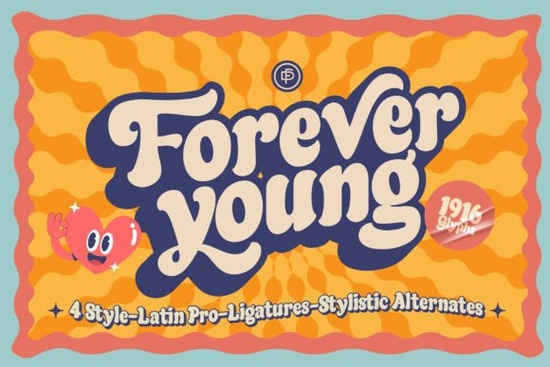
If you need a typeface that instantly brings back neon signs, vinyl records, and Saturday night dance floors, the Forever Young Font delivers exactly that energy. This disco 70s retro font features thick strokes, playful curves, and unmistakable geometric flourishes that defined one of music’s most vibrant decades. You will find it works beautifully for party invitations, vintage-style packaging, and small business logos that want to stand out without feeling dated. Exaggerated serifs and sweeping swirls draw attention while staying readable. Dark backgrounds or muted earth tones amplify the nostalgic mood instantly.
What makes this disco 70s retro font different from other vintage typefaces?
Many revival faces rely on strict symmetry, but this design leans into the era’s experimental spirit. Shapes shift between sharp angles and soft loops, mimicking hand-painted signage outside classic record stores. Those funky shapes add rhythm to your layouts rather than serving as pure decoration. Widening the tracking slightly creates breathing room that keeps the retro aesthetic from feeling cramped. Layering outlines or adding subtle drop shadows enhances depth. Checking a dedicated example page or the official Forever Young listing reveals how details hold up across different display sizes.
Where can you actually use this typeface in your projects?
Designers typically reach for display fonts like this when they need instant character. Print-on-demand sellers combine it with textured backgrounds to produce t-shirts, mugs, and tote bags that appeal to vintage collectors. Crafters and scrapbookers use it for wedding invitations, birthday banners, and gift tags because the flowing lines complement floral illustrations. Small businesses in food and entertainment frequently choose it for menu covers, coasters, and storefront decals. The versatility comes from its balanced weight, which reads clearly at small sizes and looks bold at large scales. Pairing it with clean sans-serif text underneath keeps complex information legible while letting the headline carry the mood.
How do you set it up for print and digital files?
Before exporting artwork, verify your software handles the character sets. Modern programs manage standard Latin glyphs easily, though special ligatures may need manual placement via OpenType menus. Convert text to outlines for commercial printing to avoid substitution errors. For web use, a compressed SVG preserves crisp edges, while 300 DPI rasterization ensures smooth curves on proofs. Testing color choices against the typeface prevents clashes with warm seventies palettes. Exploring a curated collection of matching retro font display fonts saves time when building brand kits.
Which similar options should you try if this doesn’t fit your layout?
Every project has unique spacing needs, and sometimes proportions feel off. Switching to a complementary option keeps designs cohesive. If you prefer sharper corners, reviewing Barbie Vintage Extrude Font offers a geometric alternative. Projects leaning athletic benefit from testing Varsity Lover Font, which introduces familiar block letterforms. Freelancers working on flow-heavy layouts often prefer Miracle Groovy Font for its continuous motion. Visiting the main product page helps you compare x-heights and punctuation availability.
What should you check before downloading and starting work?
Reviewing specifications prevents production headaches. Confirm the license covers your intended use, whether for personal crafts, client mockups, or merchandise. Match the file format to your workflow, keeping vector-friendly archives for scaling flexibility. Test kerning pairs that cause gaps, adjusting manually if auto-spacing misaligns elements. Prepare color swatches complementing deep blue accents, which make warm-backed typefaces pop. Save multiple export variations early to handle revision requests efficiently.
Quick Pre-Production Checklist:
- Verify commercial usage rights match your project scope
- Export text to outlines for press-ready PDFs
- Set line spacing to at least 1.2 times the cap height to prevent overlapping descenders
- Run a draft print at actual size to judge curve smoothness
- Archive the original files with your project folder for future edits
When you approach the typeface as a tool rather than a decoration, your layouts gain direction instead of distraction. Try setting a single headline with generous margins, add one accent illustration, and let the letterforms carry the conversation. Adjust until the balance feels intentional, then move forward with confidence.
Get Started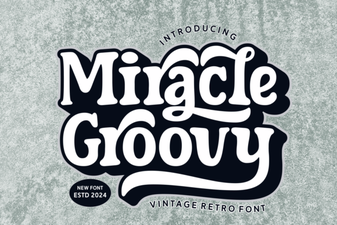 Miracle Groovy Font for Creative Design Projects
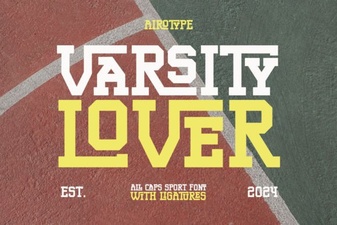 Unlock Your Creativity with the Varsity Lover Font
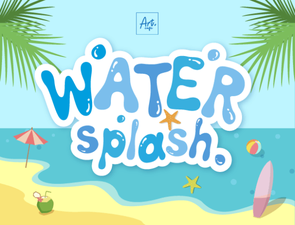 Creative Typography with Water Splash Font Effects
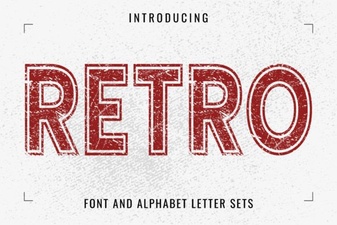 Reviving Retro Fonts for Modern Web Design
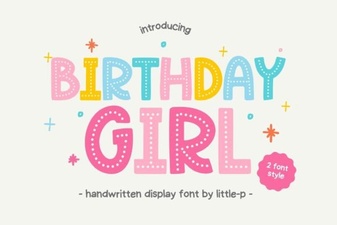 Creative Fonts for Birthday Girl Projects
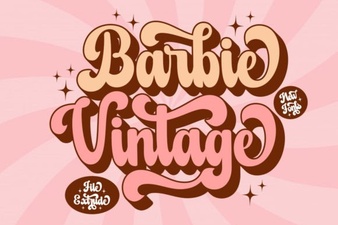 Mastering Retro Fonts: Barbie Extrude Design Projects