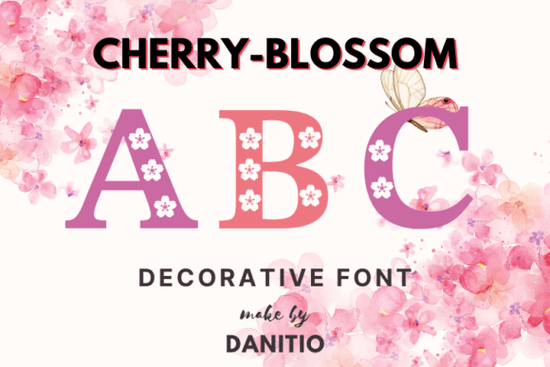
If you are looking for a decorative typeface that brings a soft, seasonal feel to your projects, the Cherry Blossom Font delivers exactly that. Designed with flowing curves and subtle flourishes, it captures the delicate spirit of sakura without leaning into heavy floral templates. Crafters, print-on-demand sellers, and small business owners often choose this style for wedding stationery, spring collections, boutique labels, and digital planners. The letterforms carry enough personality to read well at larger sizes, yet remain clean enough to serve as a reliable display element alongside simpler sans-serifs.
What makes this decorative typeface stand out?
The visual rhythm here relies on gentle asymmetry rather than rigid symmetry. Each capital letter ends with a soft taper, and the lowercase letters feature rounded terminals that mimic petals catching light. Because the strokes maintain consistent weight, the type remains legible even when scaled down for packaging details or social media banners. Unlike heavily connected scripts that force readers to decode messy joins, this style keeps spacing predictable. You can drop it into headers, logotypes, or gift tags and expect immediate readability.
Sakura carries cultural weight beyond mere decoration. In Japanese tradition, flower viewing events celebrate renewal and fleeting moments. When you apply this typeface to invitations, greeting cards, or limited-edition apparel, those quiet associations transfer to your audience naturally. The design respects that history while staying versatile enough for non-seasonal branding. A coffee shop might use it for a weekend brunch menu, while a planner publisher could pair it with geometric shapes for an organic-looking layout.
Where does it work best in design projects?
Print-on-demand stores benefit most when they treat display typography as the main focus rather than background texture. Place it on tote bags, ceramic mugs, or framed art prints where space allows the flourishes to breathe. Digital creators will notice how it handles transparency files and vector exports cleanly, which matters when cutting vinyl for craft sales or preparing files for heat transfer. Small retailers often combine it with minimalist photography to let the letters act as a quiet focal point instead of competing with busy visuals.
If your workflow involves mixing styles, browsing other decorative options helps you build a balanced library. Exploring vintage western themes might lead you to click on vintage rodeo type style for strong visual contrast, while brush-style alternatives often pair well with artisan sketch lettering for layered journal layouts. These combinations teach you how to scale weights and adjust tracking without overwhelming the reader.
How do you pair it without clashing?
Display typefaces thrive when they share the spotlight with neutral companions. A clean geometric sans-serif works well for body copy, receipts, or product descriptions because its straight lines ground the softer curves above. For lifestyle branding, try pairing it with a high-contrast serif that offers clear x-height separation. Keep line spacing generous when combining two display fonts, and limit yourself to one accent type per project. Too many competing styles usually turn a cohesive look into visual noise.
Alignment also plays a quiet role in successful pairings. Left-aligned body text creates a steady reading rhythm, while centered headlines borrow stability from symmetrical backing elements like boxes, lines, or simple icons. Test your combinations at actual print size before committing to bulk orders, since screens often exaggerate subtle curve differences that become obvious on paper. If you want to explore similar seasonal designs, browsing the full decorative collection shows how other creators adapt these flourishes.
What should you check before downloading?
File format availability matters more than surface aesthetics. Verify that the download includes outlines, web-safe previews, and multi-format packages if you plan to export for different software. Check licensing terms for commercial merchandise, especially if you intend to sell physical products or run paid ads. Some creators bundle additional swatches, ligatures, or alternate glyphs that expand your layout options without requiring extra purchases.
You can preview the full character set and test weights here by clicking Cherry Blossom Font. Running a quick mockup on plain cardboard or matte paper reveals how ink absorption affects thin strokes, helping you decide whether adjustments to contrast are necessary for your specific printer.
Quick implementation checklist
- Resize your headline to 100 percent at actual print dimensions before finalizing measurements
- Verify commercial usage rights match your intended sales channels
- Export vector files in both SVG and PDF formats for flexible editing
- Test color contrast against your chosen background to guarantee legibility
- Keep one secondary font strictly neutral to balance decorative curves
When you layer these steps into your routine, the type stops acting as a trendy add-on and becomes a reliable asset. Start with a single project like a product label or event banner, evaluate how it reads in real conditions, and adjust spacing accordingly. Clear boundaries around decoration usually lead to stronger, longer-lasting brand marks.
Explore Design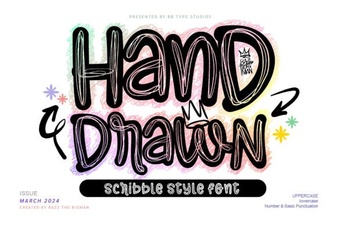 Creative Hand Drawn Fonts for Authentic Projects
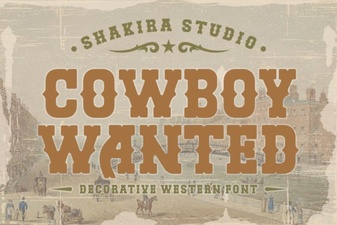 Cowboy Wanted Font Styles for Western Design Projects
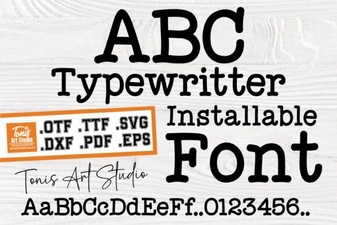 The Ab Typewriter Font: a Timeless Design Tool
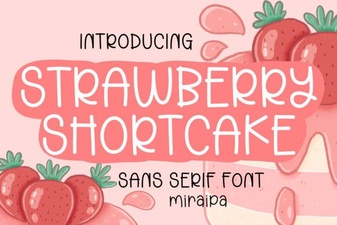 A Creative Guide to the Strawberry Shortcake Font
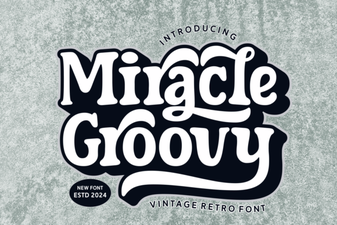 Miracle Groovy Font for Creative Design Projects
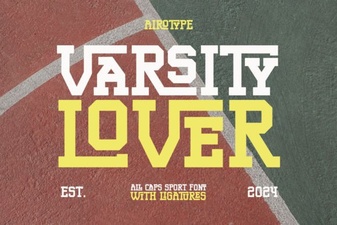 Unlock Your Creativity with the Varsity Lover Font