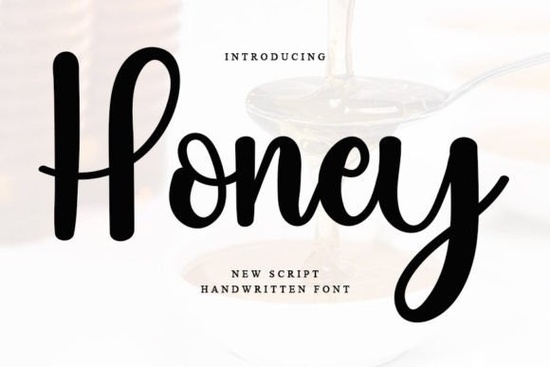
When you need a script that feels approachable yet polished, Honey delivers exactly that kind of everyday elegance. Designed for quick mockups, social media posts, and handmade product packaging, this typeface bridges the gap between casual notebook scribbles and refined calligraphy. Instead of forcing complex ligatures or worrying about uneven baseline alignment, you get smooth letterforms that read clearly at small sizes while still carrying enough personality to stand out on a storefront banner or digital flyer. Many small business owners and print-on-demand creators reach for this style because it removes the guesswork from layout design. You can drop it into graphic software or crafting programs without spending extra hours adjusting tracking or hunting for missing characters. The weight distribution stays consistent, which means your text blocks look intentional rather than scattered.
What actually separates a functional handwritten typeface from one that looks messy when scaled up?
The answer usually comes down to stroke variation and spacing. This particular font avoids overly dramatic flourishes that break apart during heat transfer printing or vinyl cutting. The x-height remains generous, ensuring legibility even when reduced to fit around coffee cup sleeves or gift tag corners. Crafters frequently use it for watercolor backgrounds, botanical illustrations, and minimalist sticker sheets because the lines maintain their integrity across different materials. If you are designing for Etsy listings or wholesale catalogs, choosing a script with stable proportions saves you from constant manual kerning adjustments. You simply add the text, verify the baseline, and move straight to exporting high-resolution image files.
Which projects truly benefit from this level of fluidity?
Digital planners, YouTube thumbnails, and event stationery all rely on clear typography that still feels personal. When building an online store, pairing a strong sans-serif header with a lighter script for accents creates immediate visual hierarchy. Small retailers often apply this combination to shipping labels, thank-you cards, and product care instructions. The same principle works well for workshop handouts or community bulletin boards where readability matters but plain body text falls flat. Since the character set includes standard punctuation and currency symbols, you rarely need to swap to a secondary font mid-project. This consistency keeps your brand voice unified across multiple touchpoints.
How do you expand your library without overwhelming your workspace?
Most professional layouts only need two or three complementary typefaces maximum. For those who prefer browsing curated collections, grabbing a complete handwritten typeface collection gives you ready-made combinations that already share compatible spacing rules. If your current designs lean toward playful greeting cards or children’s activity books, switching to a softer alternative like Snoopy typeface adds a gentle contrast without disrupting the overall mood. Meanwhile, rustic packaging, bar signage, or barn-style event invites often pair better with a textured option such as Whiskey script, which mirrors the same weathered aesthetic at slightly lower resolution settings.
Where should you focus your testing before finalizing print files?
Always preview your copy at actual output dimensions, especially when working with sublimation transfers or adhesive decals. Tight letter spacing that looks fine on screen can cause ink bleed or cracking when pressed onto fabric. Running a quick test strip through your cutting machine or sending a single proof to your printer catches alignment issues early. Boutique apparel shops frequently layer these scripts over vintage paper textures or denim washes, which requires careful color contrast checks to prevent blending into busy backgrounds. If you want to experiment with more structured alternatives later, trying La Charly lettering provides clean geometric transitions, while switching to Madelyn font introduces tighter vertical rhythm for dense editorial layouts.
Before committing to a full production run, run through this quick verification list to keep your workflow efficient:
- Open your design software and test the full alphabet plus common punctuation against your background colors
- Reduce a sample sentence to eight pixels to confirm legibility on mobile screens
- Export a vector outline and manually adjust any overlapping control points before cutting
- Save layered source files alongside flattened previews labeled with date and purpose
Keep a dedicated folder for approved spacing presets so you never have to recalculate margins from scratch. Once your templates are organized, you will notice how quickly ideas move from sketch to finished product without getting stuck on typographic details.
Explore Design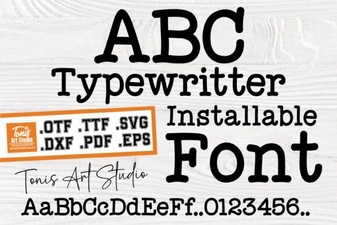 The Ab Typewriter Font: a Timeless Design Tool
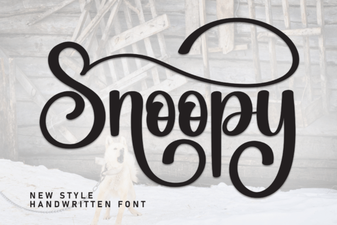 Craft Your Project with the Snoopy Font Style
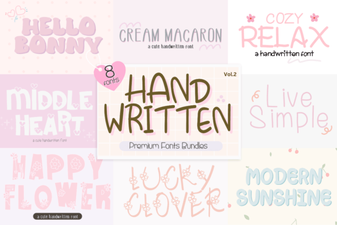 Handwritten Font Bundles for Creative Design Projects
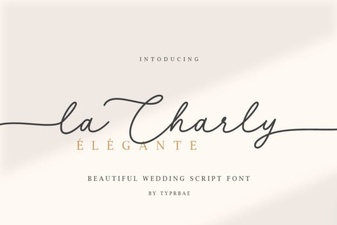 La Charly Font: Design Tips & Creative Projects
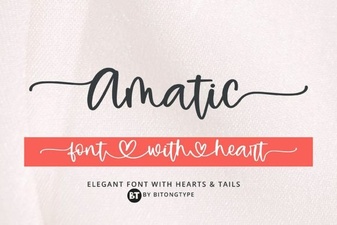 Amatic Sc: Bold & Elegant Handwritten Font Designs
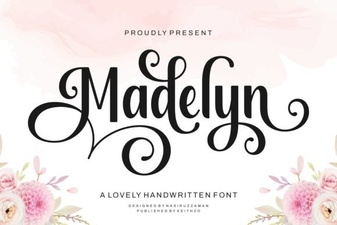 Madelyn Font: Modern Style for Creative Projects